The Neon Museum
Get a Flash From Las Vegas’ Past

Las Vegas Neon Museum Story & Photos by Debbie Stone
Renowned for its vibrant nightlife, casinos, extravagant resorts, top-name shows, high-end shopping, and glitzy atmosphere, Las Vegas, Nevada, is a popular destination for travelers worldwide. Established in 1905, it didn’t take long for “Sin City” to evolve into the entertainment mecca it is today.
Though The Strip is where you’ll find most visitors seeking this type of scene, there are other places in town that offer different experiences. So, if you need a break from all the manic energy, know you have options.
Check out the Neon Museum north of downtown Vegas. This fascinating attraction portrays a side of Las Vegas that spotlights the city’s cultural and historical roots in a captivating way. It showcases another side of the city that is both entertaining, albeit in a more relaxed manner, and informative.
Listen to Debbie Stone discuss her visit to the Neon Museum on Big Blend Radio’s “Road Trip Radio” Podcast:
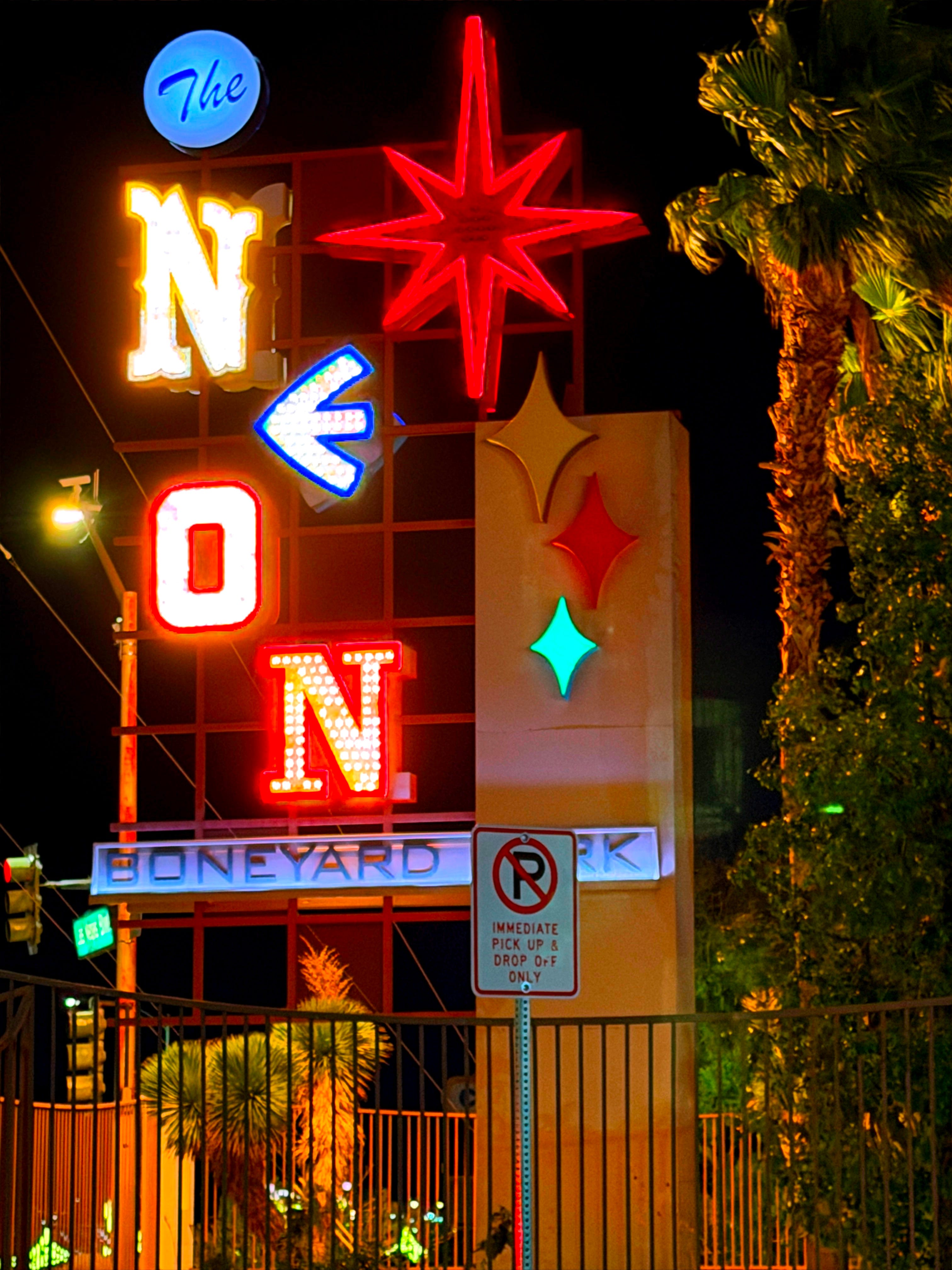
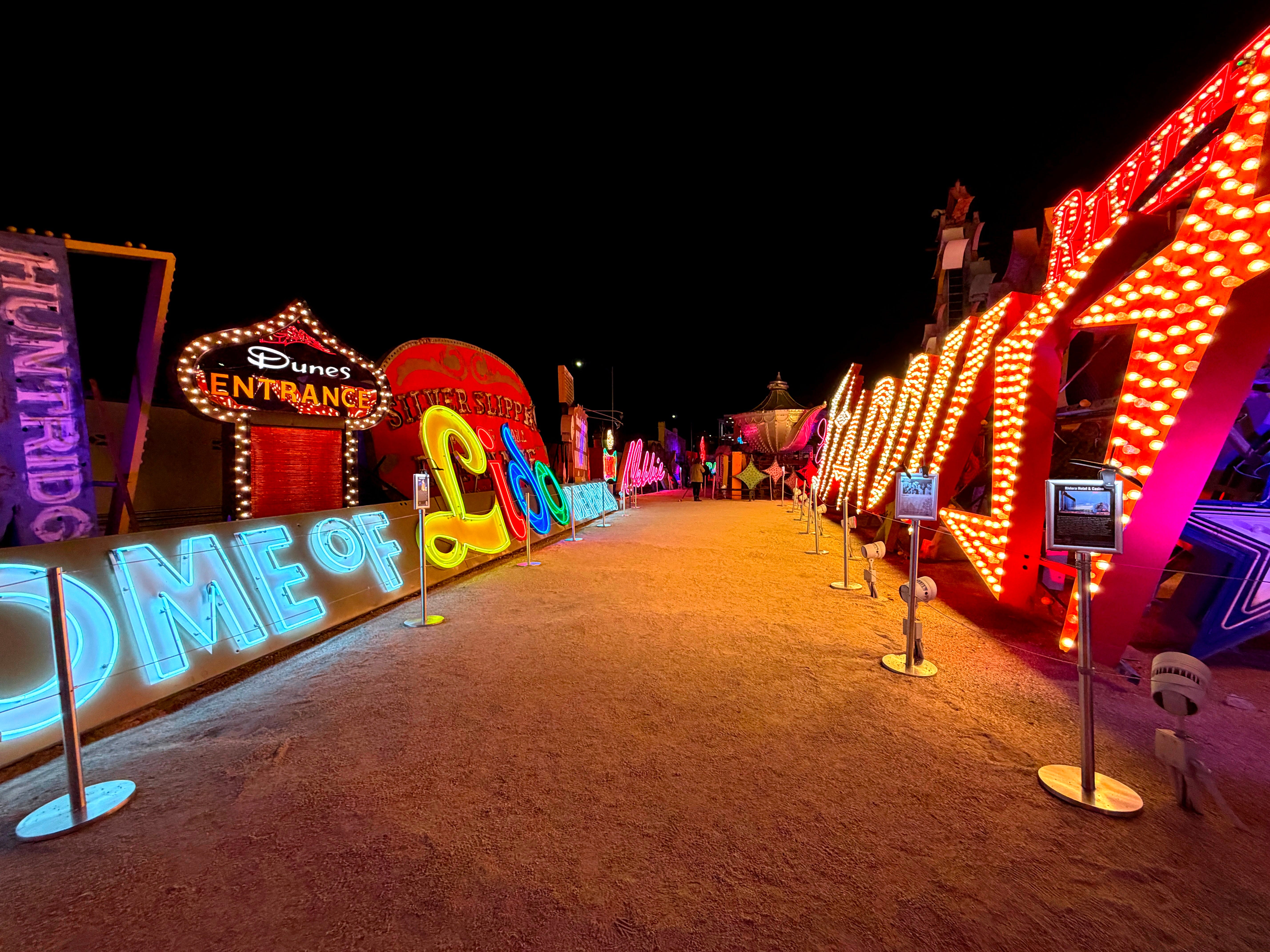
Founded in 1996, the museum is a non-profit organization dedicated to “collecting, preserving, studying and exhibiting iconic Las Vegas signs for educational, historic, arts and cultural enrichment.” Since opening, it has amassed around 250 signs, 28 of which are electrified and exhibited in the Neon Boneyard.
The Boneyard is an open-air collection of vintage signs from the city’s most famous hotels, casinos, and businesses, dating back to the 1930s and onward. Each has its own unique story about the personalities who created it, what inspired it, where and when it was made, and the role it played in Las Vegas’ past.
Though you can visit the Boneyard during the day, it’s optimal to go at night when the majority of the signs are lit up. It makes for a dramatic scene and great pics.
Walking through the Boneyard takes you back in time, and the air of nostalgia is prominent. The signs reflect significant moments in the city’s history and are tied to legendary spots that shaped the town’s identity. You’ll get to experience Las Vegas as it was in its golden days and gain appreciation for its colorful past.
Some of the signs appear vibrant, while others are in states of decay. And a few are intentionally concealed, creating a sense of mystery that awaits discovery. Once symbols of well-known businesses and landmarks, they’ve now found a new place to shine in the Boneyard. The museum works to make them relevant and continue to speak to future generations.
Seeing the massive signs up close and personal makes the experience more potent and compelling. It’s one that combines elements of history, art, engineering, and pop culture, allowing visitors to examine each of these aspects separately or take them in en masse.
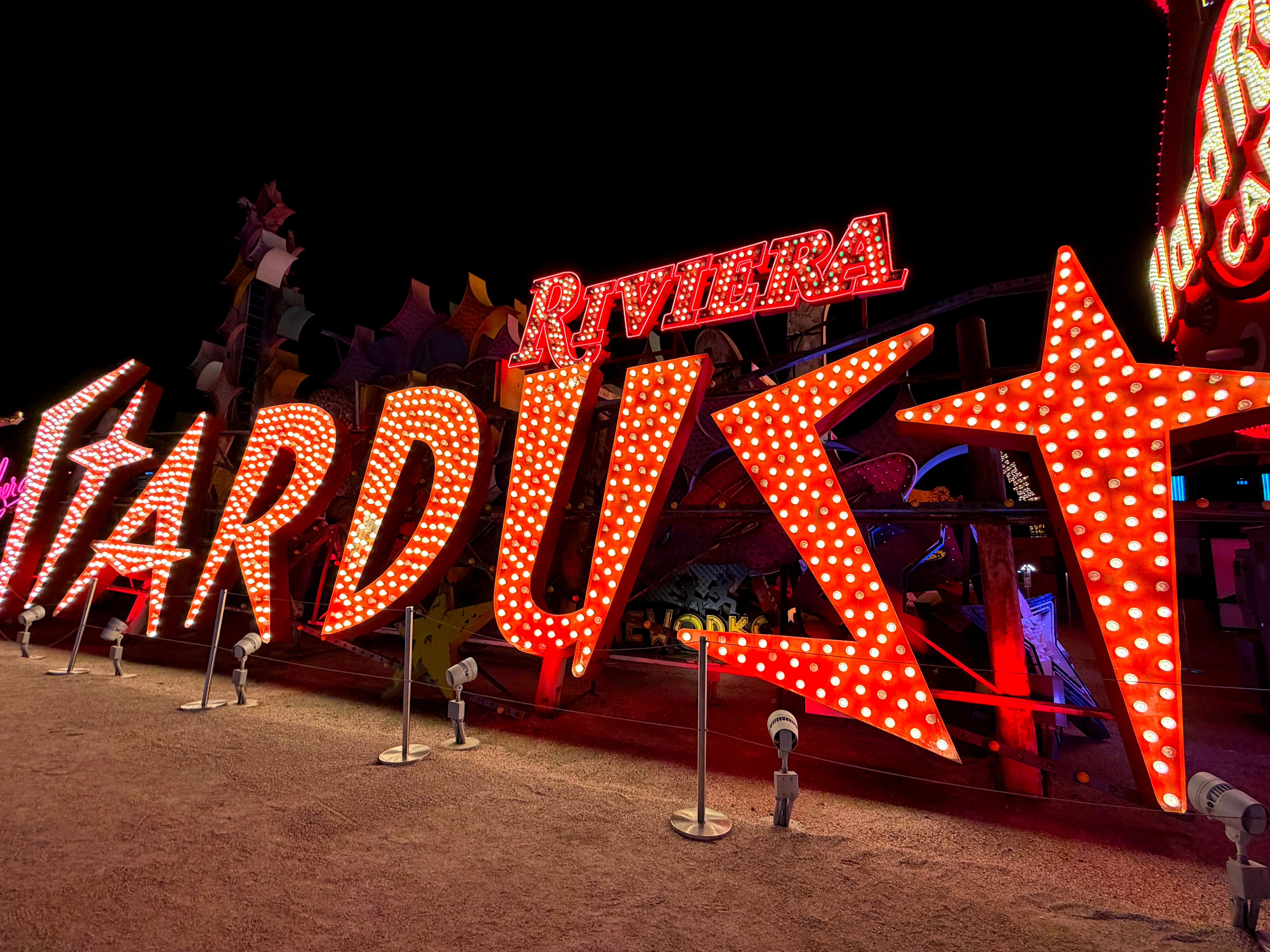
Signs featured in the Boneyard include The Stardust, Moulin Rouge, El Cortez Hotel & Casino, Flamingo, Tropicana, City Center Motel, Sulinda Inn, Desert Rose Motel, Dunes Hotel & Casino, Desert Inn Hotel & Casino, Sands Hotel and Casino, Debbie Reynolds Hollywood Hotel & Casino, Ann Meyers Queen of Heart, Anita’s Beauty Salon, Steiner Cleaners, Red Barn, Anderson Dairy, Hard Rock Café, Liberace Museum, and more.
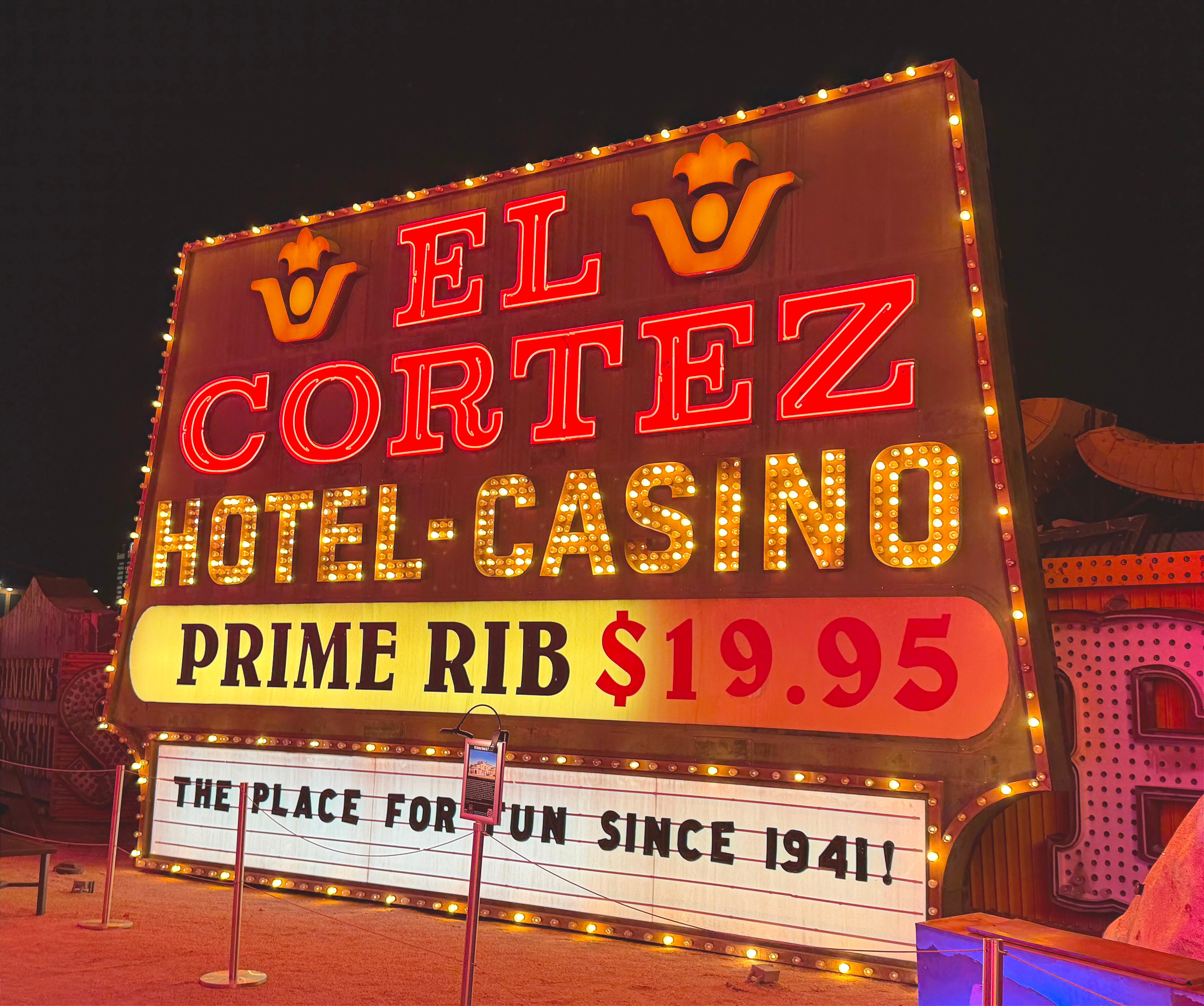
El Cortez, for example, was once owned by the notorious Benjamin “Bugsy” Siegel, who used the property as a training ground for the Flamingo, the oldest hotel and casino on The Strip. The Flamingo opened in 1946 and remains the longest-running casino on The Strip. And it’s regarded as the birthplace of entertainment in Vegas with such headliners as Wayne Newton, Donny & Marie, and now RuPaul’s Drag Race.
The Moulin Rouge was only open for less than a year back in 1955; however, it made its mark as the first racially integrated casino in the town’s history. At the time, Las Vegas didn’t allow black performers to stay in hotels on the Strip, though they were able to work at Strip properties in the roles of cooks, maids, janitors, and porters. Even headliners like Louie Armstrong and Ella Fitzgerald could only enter venues from service doors. After they did their show, they were escorted out through the same entrances.
The Stardust Hotel & Casino sign is a nod to the space-age era with its space-age font. It was originally a freestanding road sign designed to catch the attention of drivers coming from California and heading to Vegas on Interstate 15.
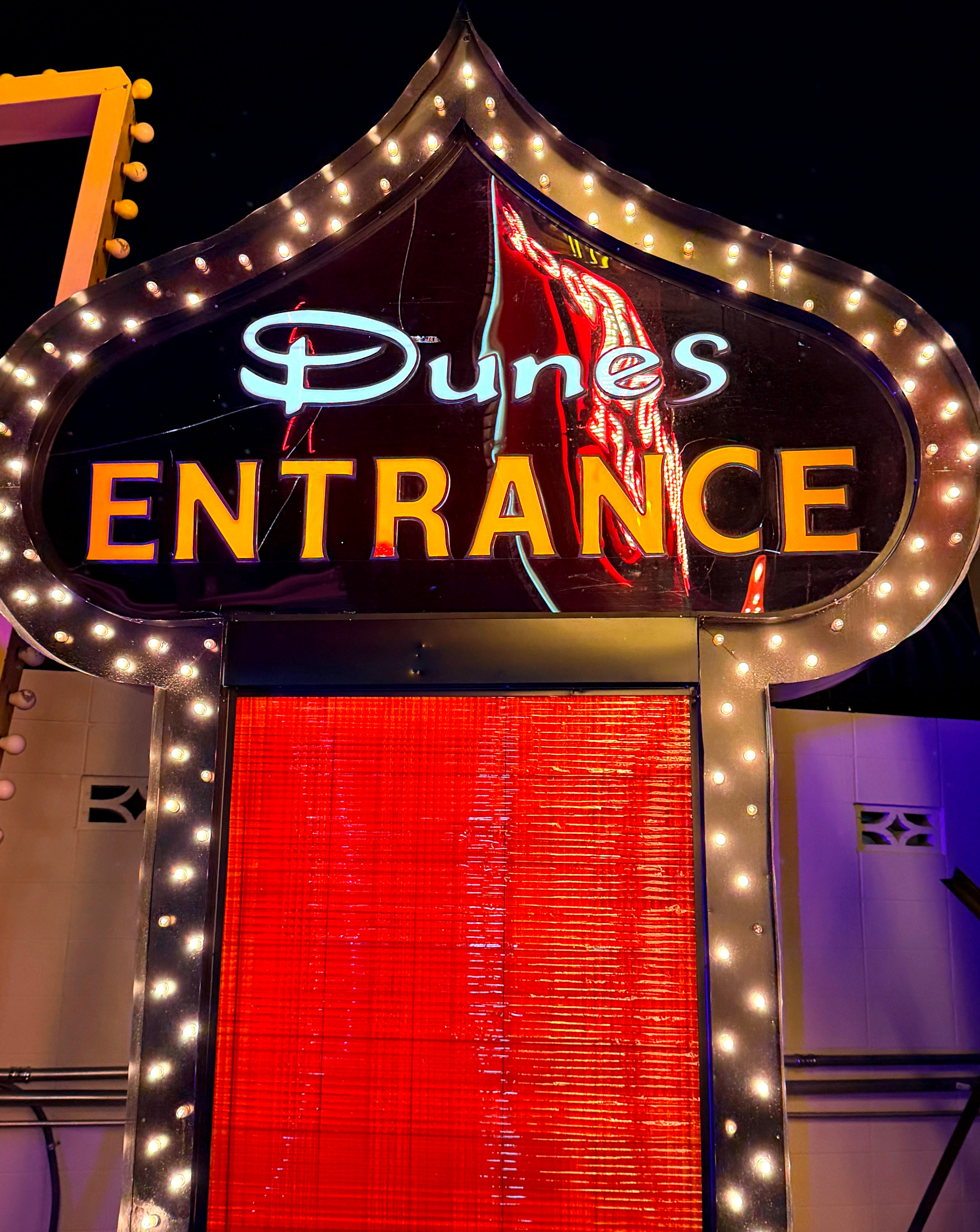
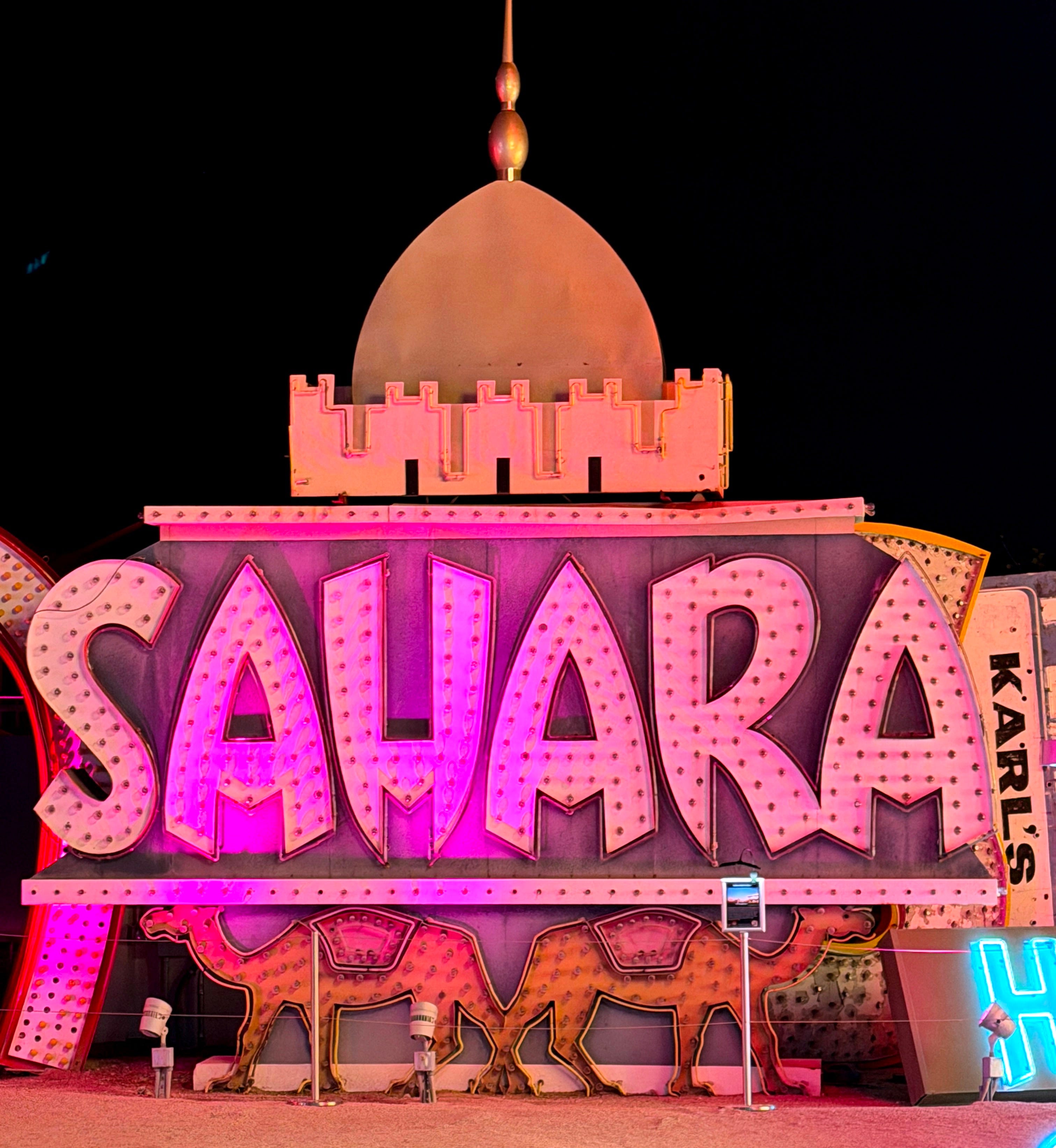
The Dunes Hotel & Casino sign is the last known sign from this legendary property. Its architecture and design feature an Arabian Nights theme. The property boasted the high-profile restaurant Sultan’s Table and a gigantic golf course, as well as lavish productions like Minsky’s Follies, which had the first topless performers in the history of Vegas.
Sulinda Inn was touted as “one of the finest motels in the west,” while Desert Rose Motel was notable for frequent guests Gus and Gabby, a pair of chimps who accompanied their owners to Las Vegas. And City Center Motel was designed by artist Betty Willis, the visionary behind the famed “Welcome to Las Vegas” sign.
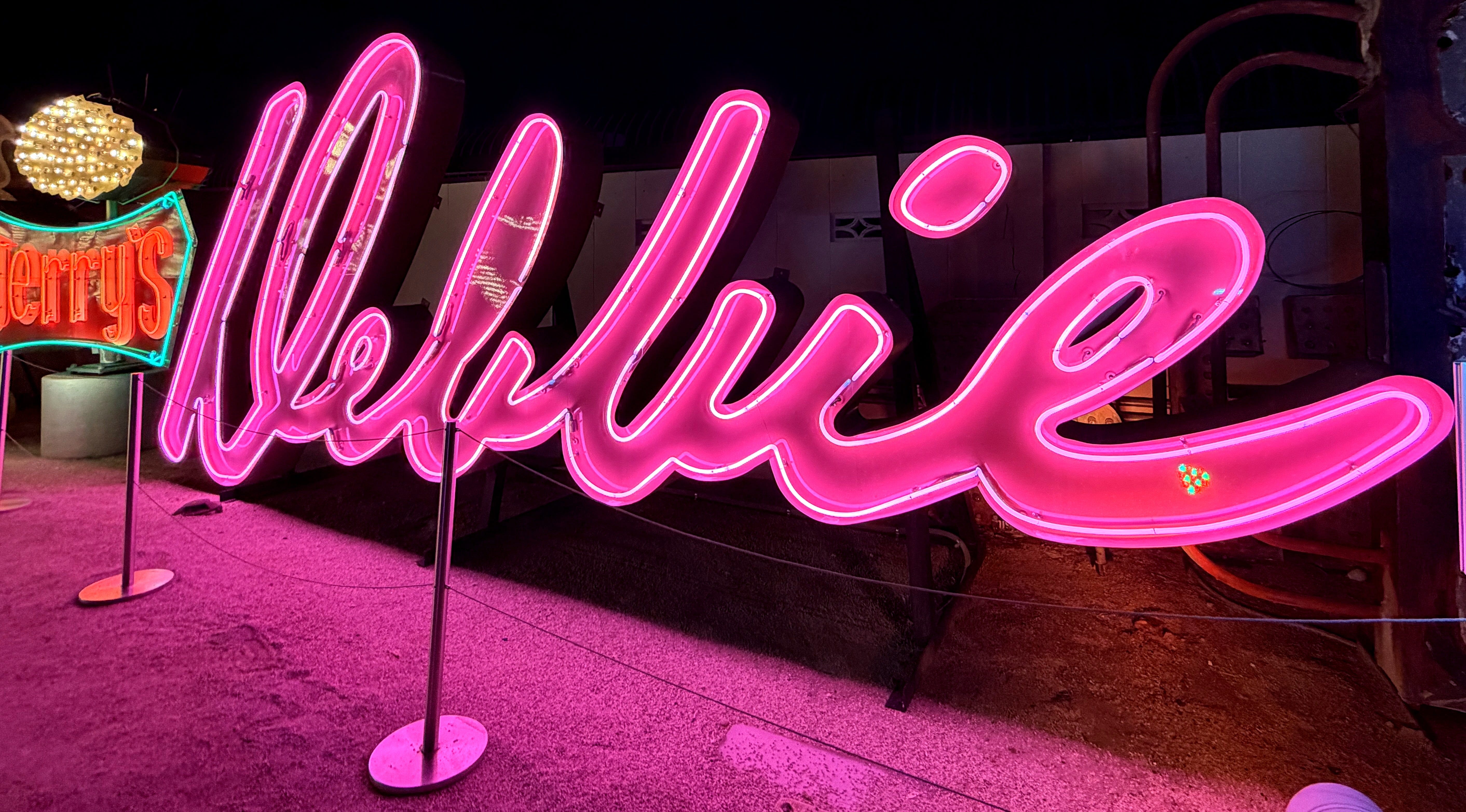
Hollywood icon and Las Vegas performer Debbie Reynolds opened the Debbie Reynolds Hotel & Casino in 1993. The property was aimed at providing Reynolds with a steady venue to perform in, as well as a space to show her vast collection of film memorabilia. It had financial issues and was eventually sold in 1998.
The sign for the former Liberace Museum, opened by the pianist/singer/actor himself in 1979, incorporates his trademark piano and candelabra. The museum closed in 2010.
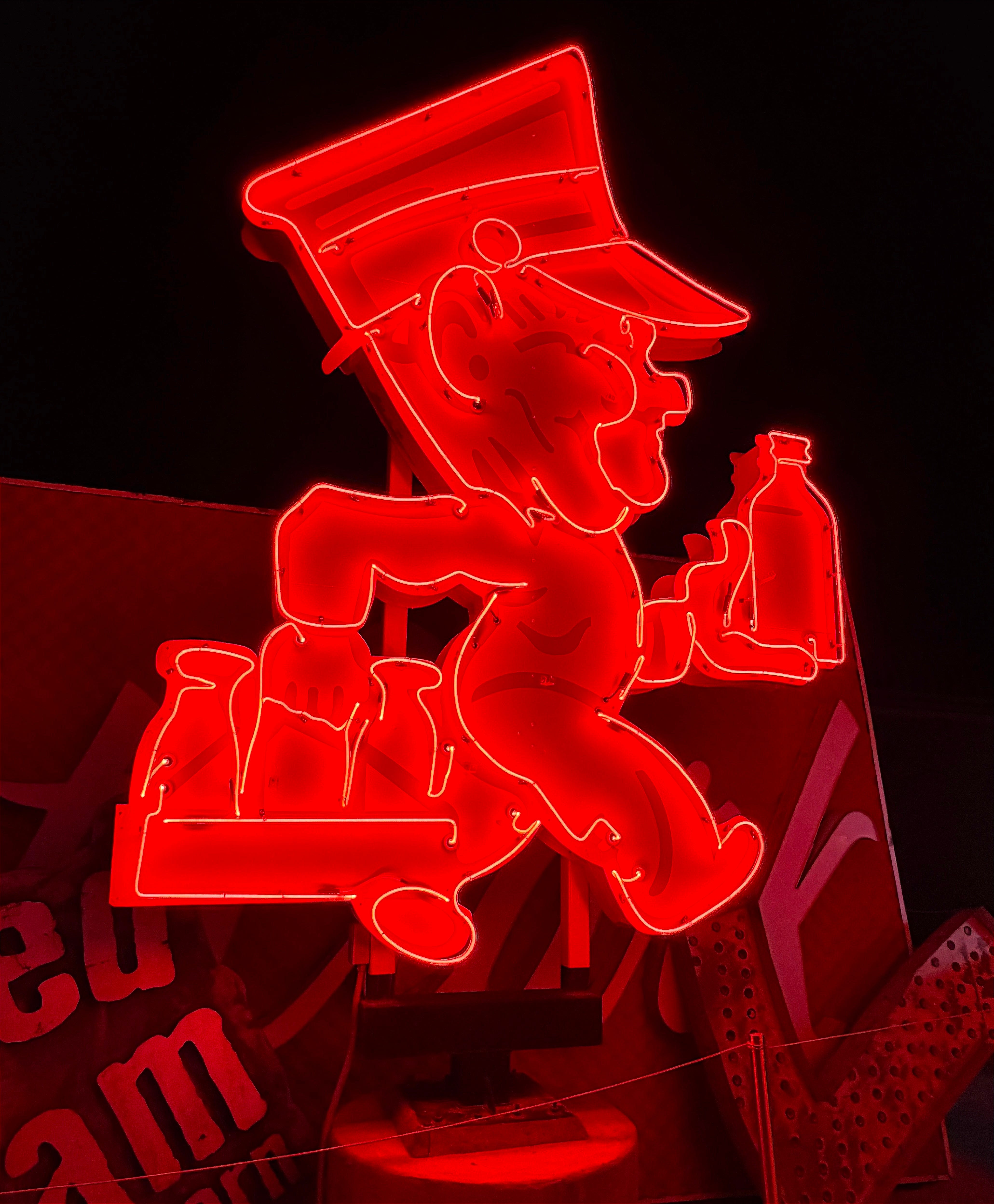
Anderson Dairy, which was established in 1907, relocated its plant in the mid-1950s, and the new sign for the business featured “Andy” Anderson, the company’s mascot. Lit up in bright red, it was hard to miss “Andy!”
The Red Barn’s history is interesting to note, as it first opened as an antique store in 1958. Over the years, it went through a variety of iterations. In the 1960s, it was a coffeehouse and bar, frequented by college students and construction workers during the day. At night, it secretly served an LGBTQ+ clientele. By the 70s, it was among the town’s very first openly LGBTQ+ bars.
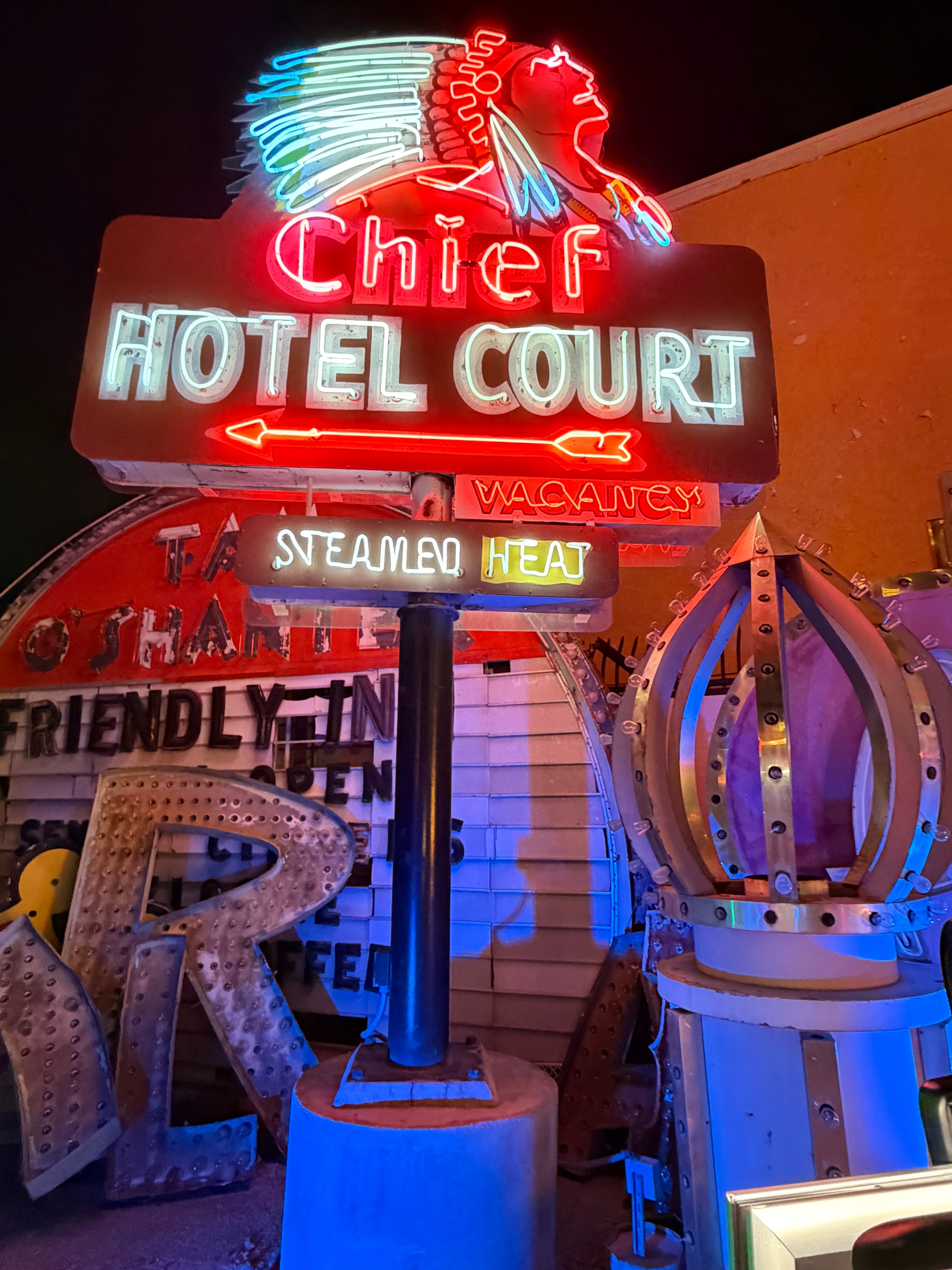
The Chief Hotel Court sign is the oldest operational sign in the museum’s collection, dating back to 1940. It depicts a stereotypical Plains Indian motif, though it’s not accurate to the tribes that are indigenous to the Las Vegas Valley. The museum notes that this imagery “is an example of the romanticized concepts of Native Americans that were common in properties tied to convey the concept of the Old West.”
The Hard Rock Café sign is the first large neon guitar in the franchise’s history and is modeled after guitarist Pete Townshend’s custom Gibson Les Paul guitar. It’s the largest restored sign at the museum, and donors around the world helped make the restoration possible.
The Neon Museum offers both guided and self-guided tours. There are also docents on the property who will gladly answer questions and provide additional commentary, as they are fonts of knowledge about Las Vegas history.
Plan your visit: https://neonmuseum.org/
Debbie Stone is an established travel writer and columnist, and regular contributor for Big Blend Radio and Big Blend Magazines, who crosses the globe in search of unique destinations and experiences to share with her readers and listeners. She’s an avid explorer who welcomes new opportunities to increase awareness and enthusiasm for places, culture, food, history, nature, outdoor adventure, wellness, and more. Her travels have taken her to nearly 100 countries and all seven continents.
Subscribe to Debbie’s “Global Adventures” Podcast and Enjoy Articles & Episodes on the digital “Global Adventures” Magazine!